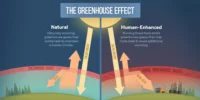

Global warming means the long-term rise in Earth’s average surface temperature. The main reason for recent warming is the increasing concentration of certain gases in the atmosphere. These gases are called greenhouse gases because they absorb and re-emit some of the heat energy Earth’s surface emits.
The greenhouse effect is a natural process and is necessary for life. However, human activities are increasing the amount of several greenhouse gases, strengthening this natural effect. In this lesson, we will learn which gases contribute to global warming, how they trap heat, where they come from, and why their effects are different.
Let Us Understand the Concept
What is the greenhouse effect?
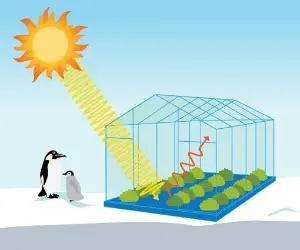
Energy from the Sun reaches Earth mainly as visible light and other forms of short-wave radiation. The land, oceans, and atmosphere absorb part of this energy and become warm. Earth then releases energy back towards space as infrared radiation, which is a form of heat radiation.
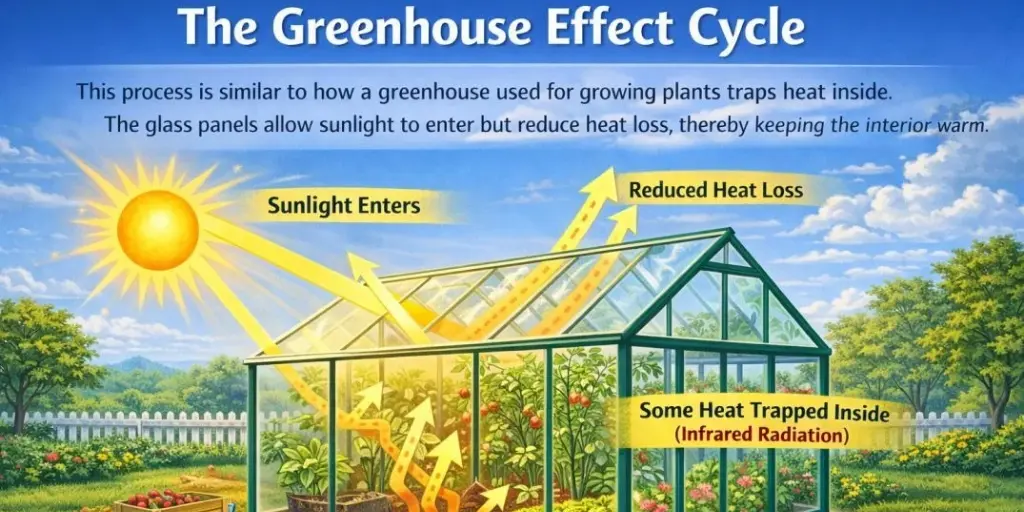
Greenhouse gases allow much of the incoming sunlight to pass through the atmosphere, but they absorb some of the outgoing infrared radiation. After absorbing this energy, their molecules release infrared radiation in different directions. Some of this energy returns towards Earth’s surface. As a result, the surface and lower atmosphere remain warmer than they would be without these gases.
This process is similar to the way glass in a greenhouse helps keep the inside warm, although the atmosphere does not work exactly like a glass box. The natural greenhouse effect makes Earth suitable for liquid water and life. The problem is the enhanced greenhouse effect, caused mainly by the increase of greenhouse gases from human activities.
Why does an increase in greenhouse gases cause warming?
When the concentration of greenhouse gases increases, the atmosphere can absorb more outgoing infrared radiation. At first, less heat escapes directly to space. Earth then warms until it reaches a new balance in which enough energy is again released to space. This new balance occurs at a higher average temperature.
The warming is not caused by one single gas alone. Different gases absorb infrared radiation in different ways, remain in the atmosphere for different lengths of time, and come from different sources. Their combined effect influences Earth’s climate.
Carbon dioxide: CO2
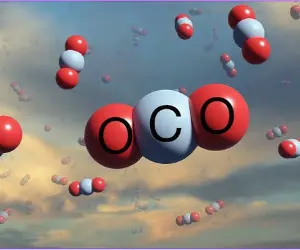
Carbon dioxide is the most important human-caused long-lived greenhouse gas. It is naturally present in the atmosphere and is also released when organisms respire, when organic matter decomposes, and when volcanoes erupt. Plants and oceans remove some carbon dioxide from the atmosphere, but human activities are adding it faster than natural systems can remove it.
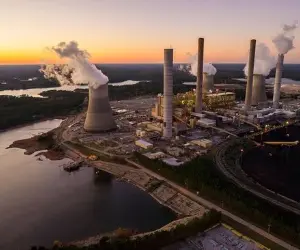
The largest human sources are the burning of coal, petroleum, and natural gas for electricity, transport, heating, and industry. Carbon dioxide is also released when forests are cleared or burned because stored carbon combines with oxygen during burning. Cement production releases carbon dioxide when limestone is chemically changed into lime.
Carbon dioxide can remain in the climate system for a very long time. Some of it is absorbed by oceans and plants, but this does not remove all of the added carbon permanently. Increased carbon dioxide also contributes to ocean acidification, because carbon dioxide dissolves in seawater and forms carbonic acid.
Methane: CH4
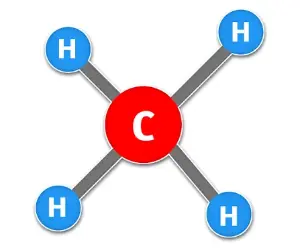
Methane is a powerful greenhouse gas. It absorbs infrared radiation more strongly than carbon dioxide for a given amount of gas, especially over shorter time periods. However, methane generally remains in the atmosphere for a much shorter time than carbon dioxide.
Methane is released when plant material decomposes without much oxygen. Important sources include cattle and other ruminant animals, rice fields, landfills, wetlands, and the production and transport of coal, oil, and natural gas. Leaks from natural gas systems are an important concern because natural gas contains large amounts of methane.
Methane can also take part in chemical reactions in the atmosphere that produce water vapour and increase ground-level ozone. Reducing methane emissions can therefore provide climate benefits relatively quickly, although reducing carbon dioxide remains essential for limiting long-term warming.
Nitrous oxide: N2O

Nitrous oxide, sometimes called laughing gas, is another important greenhouse gas. It is released naturally by microorganisms in soils and oceans. Human activities have increased its amount in the atmosphere, especially through the use of nitrogen fertilisers and the management of animal manure.
When soil contains more nitrogen than plants can use, microorganisms convert some of that nitrogen into nitrous oxide. Burning fuels and biomass can also release it. Nitrous oxide is long-lived and is a strong greenhouse gas. It also contributes to chemical reactions that affect the stratospheric ozone layer.
Water vapour: H2O
Water vapour is the most abundant greenhouse gas in the atmosphere and has a strong natural warming effect. The amount of water vapour in the air depends mainly on temperature. Warm air can hold more water vapour than cool air.
Water vapour usually acts as a feedback rather than the original cause of current global warming. When carbon dioxide and other gases warm the atmosphere, more water evaporates from oceans, lakes, and soil. The warmer atmosphere can then hold more water vapour, which absorbs more infrared radiation and causes additional warming. When the air cools, water vapour condenses into clouds or falls as precipitation.
This distinction is important: people do not mainly control global warming by directly adding water vapour to the atmosphere. The long-term control gases are those such as carbon dioxide, methane, and nitrous oxide that can build up because of human activities.
Ozone: O3
Ozone is made of three oxygen atoms, but its effect depends on where it is found. Ozone high in the stratosphere forms the ozone layer, which absorbs harmful ultraviolet radiation from the Sun. This ozone is different from ozone near Earth’s surface.
Ground-level ozone is formed when nitrogen oxides and volatile organic compounds react in sunlight. It is a major air pollutant and is also a greenhouse gas. It can harm human health, damage plants, and contribute to warming. Because ozone is continuously formed and destroyed, its concentration is more short-lived and local or regional than that of carbon dioxide.
Fluorinated gases
Fluorinated gases are a group of gases containing fluorine. They include hydrofluorocarbons, perfluorocarbons, sulfur hexafluoride, and nitrogen trifluoride. These gases are used in refrigeration, air-conditioning, electronics manufacturing, electrical equipment, and some industrial processes.
They are usually present in much smaller quantities than carbon dioxide, but many fluorinated gases absorb infrared radiation very strongly. Some can remain in the atmosphere for hundreds or thousands of years. Older chemicals such as chlorofluorocarbons, or CFCs, both damage the ozone layer and contribute to the greenhouse effect. Many CFCs have been restricted under international agreements, but some replacement gases are still greenhouse gases.
How are the gases compared?
Scientists compare greenhouse gases using global warming potential, or GWP. GWP estimates the warming effect of a particular mass of a gas compared with the same mass of carbon dioxide over a selected period, commonly 100 years. Carbon dioxide is assigned a reference value of 1.
A gas may have a high GWP but be emitted in a small quantity, while carbon dioxide has a lower warming effect per kilogram than some gases but is released in very large amounts and remains important for a long time. Therefore, we must consider the gas’s amount, lifetime, ability to absorb infrared radiation, and the time period used for comparison.
Natural greenhouse gases and human activities

Greenhouse gases are not automatically harmful. Carbon dioxide, methane, nitrous oxide, water vapour, and ozone all occur naturally. Natural cycles move carbon, water, and nitrogen through the atmosphere, oceans, soil, plants, and animals.
The major problem is the rapid additional release caused by activities such as burning fossil fuels, deforestation, intensive agriculture, livestock farming, waste disposal, industrial production, and leakage from refrigeration or energy systems. These activities disturb natural balances and increase the heat-trapping capacity of the atmosphere.
What are the results of global warming?
As the average temperature rises, glaciers and ice sheets lose mass, sea level rises because of melting ice and the expansion of warmer seawater, and many ecosystems experience changes in temperature and rainfall. Heat waves can become more intense or frequent in some regions. Warmer oceans and changing atmospheric conditions can also influence storms and rainfall patterns.
The exact effect is not identical everywhere. Climate depends on oceans, winds, landforms, ice, vegetation, and human activities. This is why scientists study long-term patterns rather than using one unusual hot or cold day as proof of climate change.
Important Scientific Terms and Their Meanings
Carbon dioxide: A carbon-and-oxygen gas with the formula CO2. It is released when coal, oil, or gas is burned. Global warming potential: A comparison of the warming effect of different gases. Carbon dioxide is used as the reference gas.
| Scientific Term | Simple Meaning | Example or Explanation | |
|---|---|---|---|
| Greenhouse gas | A gas that absorbs and re-emits infrared radiation | Carbon dioxide and methane are greenhouse gases. | |
| Greenhouse effect | Natural warming caused by heat-absorbing gases in the atmosphere | It helps keep Earth warm enough for life. | |
| Global warming | The long-term rise in Earth’s average temperature | Increasing greenhouse gases strengthen the greenhouse effect. | |
| Infrared radiation | Heat energy released by Earth’s surface | Greenhouse gases absorb some outgoing infrared radiation. | |
| Methane | A carbon-and-hydrogen gas with the formula CH4 | It comes from livestock, landfills, wetlands, and fuel leaks. | |
| Nitrous oxide | A nitrogen-and-oxygen gas with the formula N2O | Fertilised soils can release it. | |
| Water vapour | Water in its gaseous state | It increases when warmer air causes more evaporation. | |
| Ozone | A gas whose molecules contain three oxygen atoms | Stratospheric ozone protects from ultraviolet radiation; ground-level ozone is a pollutant. | |
| Feedback | A process that strengthens or weakens an initial change | Warming increases water vapour, causing additional warming. | |
Examples or Activities
Activity: A simple model of heat absorption
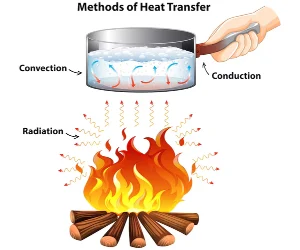
Aim: To observe that dark surfaces can absorb more radiant energy than light surfaces. This activity models one part of Earth’s energy balance; it does not directly reproduce the atmospheric greenhouse effect.
Materials required: Two identical containers, black and white paper, water, two thermometers, and sunlight or a lamp suitable for adult-supervised use.
Procedure:
- Wrap one container with black paper and the other with white paper.
- Pour equal amounts of water into both containers.
- Place them in the same sunny location for a fixed period.
- Measure and compare the water temperatures.
Observation: The water in the black container may become warmer because the dark surface absorbs more radiant energy.
Explanation and conclusion: Surfaces absorb and release energy differently. In Earth’s climate system, greenhouse gases affect the movement of infrared heat through the atmosphere. This simple model helps demonstrate energy absorption, but it should not be described as a complete model of greenhouse gas behaviour.
What Should We Understand from This Topic?
Carbon dioxide, methane, nitrous oxide, ozone, water vapour, and fluorinated gases can contribute to the greenhouse effect. Carbon dioxide is especially important because human activities release it in large quantities and its influence persists for a long time. Methane and nitrous oxide are released in smaller amounts but can have strong warming effects. Water vapour mainly responds to warming and acts as a feedback. Ozone’s effect depends on its location in the atmosphere.
Global warming is therefore linked to both the properties of greenhouse gases and the amount added to the atmosphere. Reducing fossil-fuel use, protecting forests, improving agricultural practices, preventing methane leaks, and using safer technologies can reduce the human contribution to warming.
Key Points to Remember
- Greenhouse gases absorb and re-emit outgoing infrared radiation.
- The natural greenhouse effect is necessary for life, but its enhancement causes additional warming.
- Carbon dioxide is mainly released by fossil-fuel burning, deforestation, and cement production.
- Methane comes from livestock, wetlands, landfills, rice cultivation, and fuel-system leaks.
- Nitrous oxide is strongly connected with nitrogen fertilisers, soils, manure, and combustion.
- Water vapour is a powerful greenhouse gas but mainly acts as a feedback to warming.
- Ground-level ozone is both an air pollutant and a greenhouse gas.
- Fluorinated gases can have high warming effects even when present in small quantities.
- Global warming potential compares gases with carbon dioxide over a selected time period.
- The effect of a gas depends on its concentration, lifetime, heat-absorbing ability, and emission rate.
Conclusion
Different gases contribute to global warming through the same basic process: they absorb some of Earth’s outgoing infrared heat. Their sources, lifetimes, and strengths differ, so each gas must be studied carefully. Understanding these differences helps us explain climate change scientifically and identify practical ways to reduce human-caused warming.