
Ocean acidification is the gradual decrease in the pH of seawater caused mainly by the ocean absorbing increasing amounts of carbon dioxide (CO2) from the atmosphere. The word “acidification” does not mean that the whole ocean has become an acid like vinegar. Seawater is still slightly alkaline, but its pH is moving towards the acidic side of the pH scale.
Understanding ocean acidification helps us see how the atmosphere, oceans, chemical reactions, and living organisms are connected. It also explains why changes in carbon dioxide can affect shell-forming animals, coral reefs, food webs, and human activities such as fishing and aquaculture.
Let Us Understand the Concept
What is ocean acidification?
Ocean acidification is the long-term change in ocean chemistry that occurs when seawater absorbs more carbon dioxide than usual. Since the Industrial Revolution, human activities such as burning coal, oil, and natural gas, cement production, and deforestation have increased the amount of carbon dioxide in the atmosphere. The ocean absorbs a significant part of this additional carbon dioxide.
This absorption is useful because the ocean removes some carbon dioxide from the atmosphere. However, the chemical reaction between carbon dioxide and seawater changes the water’s chemistry. It increases the concentration of hydrogen ions and lowers the pH.
Normal seawater has an average pH of about 8.1, so it is slightly alkaline. A fall in pH does not mean that seawater has suddenly become acidic. However, even a small change in pH represents a substantial chemical change because the pH scale is logarithmic. A decrease of one pH unit means a tenfold increase in hydrogen-ion concentration.
How does carbon dioxide change seawater?
The process can be understood in a series of chemical steps:
- Carbon dioxide from the atmosphere dissolves in seawater.
- Dissolved carbon dioxide reacts with water to form carbonic acid.
- Carbonic acid can release hydrogen ions and form bicarbonate ions.
- Some bicarbonate ions can release more hydrogen ions and form carbonate ions.
- The increase in hydrogen ions lowers seawater pH and reduces the availability of carbonate ions.
The simplified chemical equations are:
CO2 + H2O ⇌ H2CO3
H2CO3 ⇌ H+ + HCO3−
HCO3− ⇌ H+ + CO32−
These reactions are reversible, which is shown by the double arrow. They occur together in seawater. When more carbon dioxide enters the ocean, more hydrogen ions are produced overall. The additional hydrogen ions also react with carbonate ions, converting some of them into bicarbonate ions:
H+ + CO32− ⇌ HCO3−
Therefore, ocean acidification involves both a decrease in pH and a reduction in the concentration of carbonate ions available for some marine organisms.
Why are carbonate ions important?
Many marine organisms use calcium carbonate to build hard parts. These include corals, oysters, clams, mussels, sea urchins, some plankton, and certain microscopic organisms. A common form of calcium carbonate used by organisms is represented by the formula CaCO3.
To make a shell or skeleton, an organism combines calcium ions with carbonate ions:
Ca2+ + CO32− → CaCO3
When extra hydrogen ions react with carbonate ions, fewer carbonate ions remain available. This does not always stop shell formation immediately, but it can make the process more difficult and energetically expensive. Young organisms may be especially sensitive because they are still developing their shells or skeletons.
In some locations, seawater can become undersaturated with respect to a particular form of calcium carbonate. In such water, solid calcium carbonate is more likely to dissolve, especially if it is exposed to erosion or biological activity. The effect depends on the organism, the species, the life stage, temperature, food supply, and other environmental conditions.
Effects on corals and coral reefs
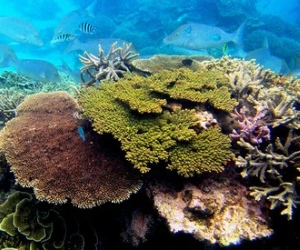
Coral animals, called polyps, build calcium carbonate skeletons that form the structure of coral reefs. Ocean acidification can reduce the rate at which some corals produce their skeletons. If skeleton-building becomes slower than erosion and physical damage, reef growth may decline.
Coral reefs provide shelter and feeding areas for many organisms. They also help protect some coastlines from waves. Ocean acidification is not the only threat to coral reefs. Increasing ocean temperatures, pollution, disease, sediment, and overfishing can also cause damage. These pressures may combine, making it harder for reefs to recover.
Effects on shellfish and plankton
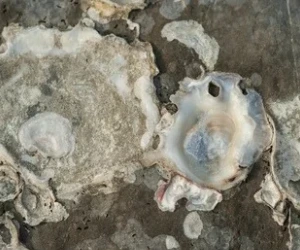
Shell-forming animals such as oysters, clams, and mussels may use more energy to create and maintain their shells when carbonate ions are less available. If they spend more energy on shell formation, less energy may remain for growth, movement, reproduction, or protection from disease.
Some tiny marine organisms also make calcium carbonate structures. These organisms are important because they form part of the base of marine food webs. If their abundance or health changes, the effects may move to organisms that feed on them and then to larger animals.
Not every marine species responds in the same way. Some organisms may tolerate changing pH better than others, and some may even benefit from additional carbon dioxide if they use it directly for photosynthesis. However, the complete ecosystem response depends on many connected factors, including temperature, oxygen levels, food availability, and habitat conditions.
Ocean acidification and the marine food web
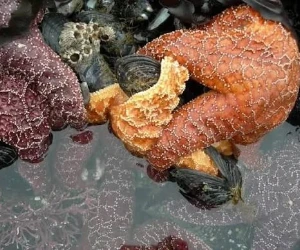
Ocean ecosystems contain producers, consumers, and decomposers. Microscopic algae and phytoplankton use sunlight to make food. Small animals feed on them, and larger fish and marine animals feed on those consumers. Shell-forming organisms can be important members of this food web.
If ocean acidification affects the growth, survival, or reproduction of one group, it may change the supply of food or shelter for other groups. This is why scientists study ocean acidification at the ecosystem level rather than looking only at one species.
What is the difference between ocean acidification and ocean warming?
Ocean acidification mainly refers to changes in seawater chemistry caused by increasing carbon dioxide absorption. Ocean warming refers to the increase in ocean temperature caused by the accumulation of heat in the climate system. Both are linked to increased greenhouse gas emissions, but they are different processes.
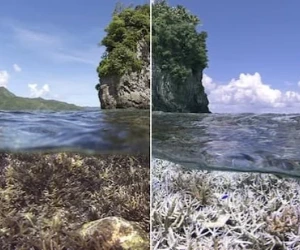
They can interact with each other. For example, warmer water may place additional stress on coral reefs, while changes in acidity may reduce their ability to build skeletons. Studying both problems together gives a more realistic understanding of marine environmental change.
Is ocean acidification caused only by human activity?
The carbon cycle naturally moves carbon dioxide between the atmosphere, oceans, rocks, soil, and living organisms. Natural processes can cause local or temporary changes in ocean acidity. For example, respiration and decomposition release carbon dioxide, while photosynthesis removes it. Upwelling can also bring naturally carbon-rich deep water to the surface.
However, the rapid, global decrease in average ocean pH observed over the industrial era is mainly connected to the extra carbon dioxide released by human activities. Natural processes continue to operate, but they do not remove the additional carbon dioxide quickly enough to prevent the observed long-term change.
How can ocean acidification be reduced?
The main long-term solution is to reduce carbon dioxide emissions. This can be done by using energy more efficiently, increasing the use of low-carbon and renewable energy sources, protecting and restoring forests and wetlands, and reducing the burning of fossil fuels. These actions address the main cause rather than only treating the effects.
Local actions can also help marine ecosystems become more resilient. Reducing pollution, protecting seagrass meadows and mangroves, managing fisheries responsibly, and lowering nutrient runoff can reduce additional stress on marine life. Monitoring seawater chemistry helps scientists, coastal communities, and shellfish farmers prepare for changing conditions.
Important Scientific Terms and Their Meanings
| Scientific Term | Simple Meaning | Example or Explanation |
|---|---|---|
| Ocean acidification | A long-term fall in ocean pH caused mainly by increased carbon dioxide absorption. | Extra atmospheric CO2 changes seawater chemistry. |
| Carbon dioxide | A gas made of one carbon atom and two oxygen atoms. | CO2 dissolves in seawater and participates in carbonic acid reactions. |
| pH | A measure related to the concentration of hydrogen ions in a solution. | Lower pH means greater acidity. |
| Carbonic acid | A weak acid formed when carbon dioxide reacts with water. | CO2 + H2O forms H2CO3. |
| Hydrogen ion | A positively charged particle that contributes to acidity. | Its concentration increases when more carbon dioxide dissolves in seawater. |
| Bicarbonate ion | An ion represented by HCO3−. | It is one of the main forms of dissolved inorganic carbon in seawater. |
| Carbonate ion | An ion represented by CO32−. | Many shell-forming organisms need it to make calcium carbonate. |
| Calcium carbonate | A mineral compound used by many organisms to build shells and skeletons. | Its formula is CaCO3. |
| Calcification | The biological process of making calcium carbonate structures. | Corals use calcification to build reef skeletons. |
| Carbon cycle | The movement of carbon through air, water, rocks, soil, and living organisms. | Photosynthesis, respiration, and ocean absorption are parts of this cycle. |
| Ocean ecosystem | Living organisms and non-living conditions interacting in the ocean. | Fish, plankton, water chemistry, temperature, and habitats form connected parts of the ecosystem. |
Examples or Activities
Activity: Comparing pH changes safely
This simple demonstration shows that adding carbon dioxide to water can change its pH. It does not reproduce all the conditions of the ocean, so it should be used only to understand the basic chemical idea.
Aim: To observe that carbon dioxide from exhaled air can make water slightly more acidic.
Materials Required: Two clean transparent cups, drinking water, a drinking straw, and red-cabbage indicator prepared by an adult or teacher. Red-cabbage indicator changes colour over a range of pH values.
Procedure:
- Pour equal amounts of water into the two cups.
- Add the same amount of red-cabbage indicator to both cups.
- Leave one cup as the comparison sample.
- With adult or teacher supervision, gently blow air through a straw into the second cup for a short period. Do not suck the liquid into the straw.
- Compare the colours of the two cups.
Observation: The water into which air was bubbled may show a colour change indicating a lower pH.
Explanation: Exhaled air contains more carbon dioxide than ordinary air. Some of this carbon dioxide dissolves in the water and forms carbonic acid, which increases hydrogen-ion concentration.
Conclusion: Carbon dioxide dissolving in water can change its pH. The ocean experiences a much larger and more complex version of this process, along with buffering, circulation, biological activity, and mineral chemistry.
Important Formulas and Equations
Ocean acidification is mainly explained through chemical equilibrium equations rather than a numerical formula:
- CO2 + H2O ⇌ H2CO3: carbon dioxide and water form carbonic acid.
- H2CO3 ⇌ H+ + HCO3−: carbonic acid releases hydrogen ions and bicarbonate ions.
- HCO3− ⇌ H+ + CO32−: bicarbonate can release more hydrogen ions and form carbonate ions.
- H+ + CO32− ⇌ HCO3−: extra hydrogen ions reduce the amount of carbonate ions available.
- Ca2+ + CO32− → CaCO3: calcium and carbonate ions can form calcium carbonate shells or skeletons.
The symbol H+ represents a hydrogen ion, HCO3− represents a bicarbonate ion, and CO32− represents a carbonate ion. The double arrow shows that the reaction can proceed in both directions and reach an equilibrium.
What Should We Understand from This Topic?
Ocean acidification is a chemical change caused mainly by the ocean absorbing extra atmospheric carbon dioxide. The dissolved carbon dioxide forms carbonic acid and increases the concentration of hydrogen ions. This lowers seawater pH and changes the balance between bicarbonate and carbonate ions.
The reduction in carbonate-ion availability can make it harder for many organisms to build calcium carbonate shells and skeletons. Corals, shellfish, plankton, and other marine organisms may therefore face additional stress. The effects are not identical for every species, but changes in one group can influence the wider food web.
Ocean acidification is connected with the global carbon cycle and climate change. Reducing carbon dioxide emissions is the most important long-term action, while reducing local pollution and protecting marine habitats can help ecosystems cope with change.
Key Points to Remember
- Ocean acidification is the long-term decrease in ocean pH caused mainly by increased absorption of atmospheric carbon dioxide.
- Seawater is still generally alkaline, even though its pH is decreasing.
- Dissolved carbon dioxide reacts with water to form carbonic acid.
- These reactions increase hydrogen ions and reduce the availability of carbonate ions.
- Many corals, shellfish, plankton, and other organisms need carbonate ions to make calcium carbonate structures.
- Ocean acidification can make shell and skeleton formation more difficult for some organisms.
- Ocean acidification and ocean warming are different processes, although both are linked to increased greenhouse gas emissions.
- Natural processes affect ocean chemistry, but the rapid modern change is mainly associated with human-produced carbon dioxide.
- Reducing carbon dioxide emissions is the main way to slow ocean acidification.
- Protecting marine habitats and reducing other forms of pollution can improve ecosystem resilience.
Conclusion
Ocean acidification shows how a change in the atmosphere can alter the chemistry of seawater and affect living organisms. When the ocean absorbs extra carbon dioxide, carbonic acid forms, pH decreases, and carbonate ions become less available. Understanding these linked steps helps us explain why shell-forming organisms and marine ecosystems may be affected and why reducing carbon dioxide emissions is essential for protecting ocean life.