
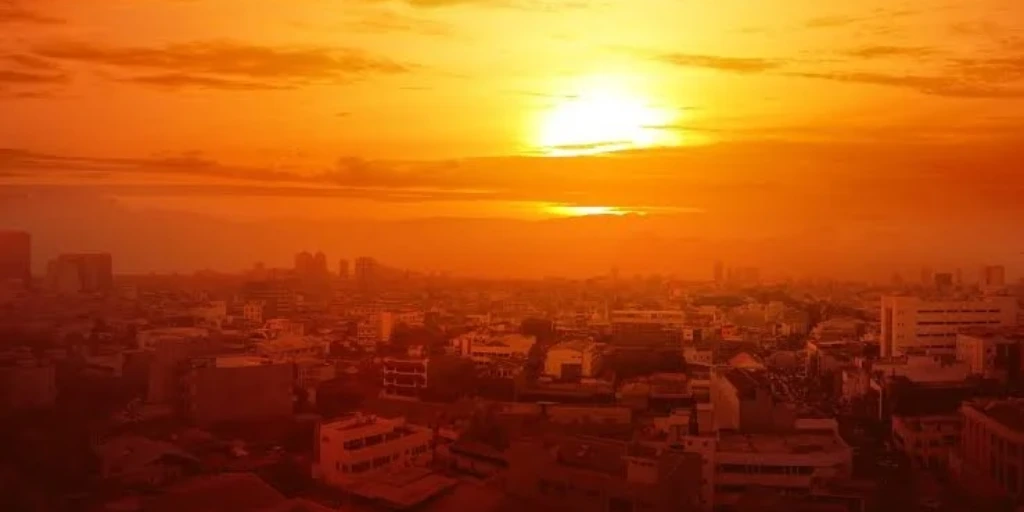
An urban heat island is a city or built-up area that is warmer than nearby rural surroundings. This temperature difference happens because cities contain many roads, roofs, buildings, and other surfaces that absorb and store solar energy. Cities also have fewer plants, less exposed soil, and more human-generated heat sources. Understanding urban heat islands helps us explain why a city street may feel much hotter than a green area outside the city, especially during summer and at night.
Urban heat islands are not separate islands of land surrounded by water. The word “island” refers to the shape that appears when temperatures are shown on a map: a warmer city may look like a warm island surrounded by cooler regions.
Let Us Understand the Concept
What is an urban heat island?
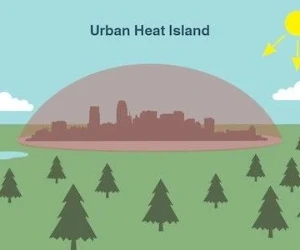
An urban heat island, often shortened to UHI, is a built-up area where the air or surface temperature is higher than in less-developed areas around it. Researchers can measure the effect in different ways. Surface temperature is the temperature of objects such as roofs, roads, and pavements. Air temperature is the temperature of the air above the ground. Dark roofs and asphalt roads can become much hotter than the surrounding air, while the air temperature difference between a city and its surroundings may be smaller or larger depending on weather conditions and the time of day.
The strength of an urban heat island is not the same everywhere. A leafy park may be cooler than a nearby paved parking area. A closely packed group of tall buildings may store heat differently from a low-density residential neighbourhood. Weather, season, wind, cloud cover, building materials, and the amount of vegetation all affect urban temperatures.
How does sunlight heat a city?
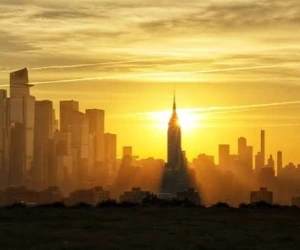
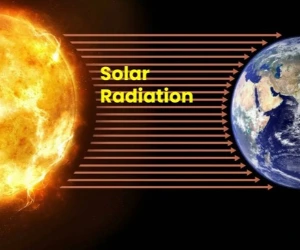
The Sun sends energy to Earth as radiation. Some of this energy is reflected into the atmosphere or space, but much of it is absorbed by the ground and objects on the surface. The absorbed energy increases the temperature of those objects.
In natural landscapes, sunlight reaches plants, soil, and water. Plants use part of the incoming energy for photosynthesis, and water in soil and leaves uses energy to evaporate. In cities, a larger part of the surface may be covered by concrete, asphalt, bricks, tiles, and roofing materials. These materials absorb solar energy and become warm. They then release heat slowly, including after sunset.
The colour and surface properties of a material matter. Dark surfaces generally absorb more solar radiation than light-coloured surfaces. A black asphalt road can become very hot in direct sunlight, while a light-coloured or reflective roof may absorb less energy. However, colour is not the only factor. The material, thickness, moisture content, texture, and ability to reflect radiation also influence heating.
Why do buildings and roads store heat?
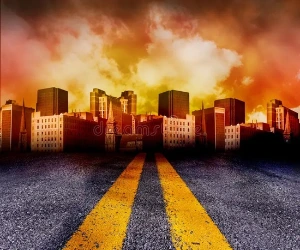
Many urban materials have a relatively high capacity to store heat. During the day, walls, roofs, roads, and pavements absorb energy. Because these materials are solid and often thick, the stored heat is not released immediately. After the Sun sets, the surrounding rural land may cool quickly, but city materials continue releasing heat into the nearby air.
This is one reason why urban heat islands are often especially noticeable at night. A grass-covered field can lose heat efficiently after sunset, while concrete walls and roads remain warm for several hours. Tall buildings can also reduce the amount of open sky visible from street level. This can slow the loss of heat by radiation during the night because surfaces exchange radiation with nearby walls and other structures instead of freely radiating toward the open sky.
How does the lack of vegetation increase urban heat?
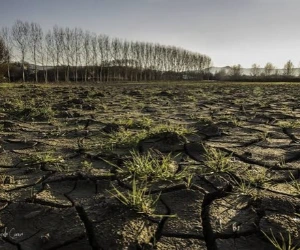
Plants naturally cool their surroundings through evapotranspiration. This word combines evaporation from soil and water surfaces with transpiration, the release of water vapour from tiny openings in plant leaves. When liquid water changes into water vapour, it requires energy. Much of this energy comes from the surrounding surface and air, so evaporation and transpiration produce a cooling effect.
Trees provide additional cooling by creating shade. A shaded pavement receives less direct sunlight than an exposed pavement, so it usually becomes less hot. Plants also improve the movement and quality of air, although their cooling effect depends on the type and amount of vegetation, available water, wind, and local conditions.
When vegetation is replaced by buildings and paved surfaces, less water is available for evaporation and transpiration. More solar energy is therefore converted into sensible heat, which is heat that directly raises the temperature of surfaces and air. This reduction in natural cooling is an important cause of urban heat islands.
How do buildings change air movement?
In an open rural area, wind can move across the land and carry heat away. In a city, buildings may block, redirect, or slow the wind. Closely spaced buildings create what is sometimes called an urban canyon: a street bordered by tall structures on both sides. The shape and direction of the street affect how sunlight, shade, and wind are distributed.
Some building arrangements provide shade and allow air to move through the street. Others trap warm air, especially when there is little wind. The exact effect depends on building height, spacing, orientation, street width, and local weather. Therefore, not every narrow street is always hotter, and not every tall building creates the same temperature pattern.
How do human activities add heat?
Human activities release additional heat into the urban environment. Vehicles produce heat when their engines burn fuel or when electric motors and other systems operate. Air conditioners cool indoor rooms by transferring heat outdoors, so many air-conditioning units can warm the air around buildings. Factories, power equipment, cooking, lighting, and other energy uses also release heat.
This human-generated heat is called anthropogenic heat. It is usually more important in densely built and highly active areas than in quiet, lightly developed areas. It is one part of the urban heat island, but it is not the only cause. The storage of solar energy by urban materials and the loss of vegetation are also major causes.
Why are cities often warmer at night?
During the day, both rural and urban surfaces receive solar energy. At night, the difference becomes clearer because urban materials release the heat they stored during the day. Rural vegetation and moist soil may cool more quickly, while roads, walls, and roofs continue transferring heat to the air.
Clouds and wind can change this pattern. Wind may carry heat away from a city, while calm conditions allow heat to remain near the surface. Cloud cover can reduce both daytime heating and nighttime cooling. This means that an urban heat island is a pattern influenced by weather, not a fixed temperature difference that remains identical every day.
What effects can urban heat islands have?
Higher urban temperatures can increase the need for cooling in homes, schools, offices, and hospitals. Greater use of air conditioners may increase electricity demand and can add more waste heat to outdoor air. Hot conditions can also make people uncomfortable and may increase heat stress, particularly for older adults, young children, outdoor workers, and people with certain health conditions.
Urban heat affects plants and animals as well. Some species may find it difficult to survive when temperatures rise or when water becomes scarce. Warmer surfaces can heat rainwater flowing over roads and roofs before it enters streams. This can influence aquatic organisms in nearby water bodies. The effects vary according to local climate, city design, available water, and the strength and duration of hot weather.
How can urban heat islands be reduced?
Urban heat islands can be reduced by combining several approaches. Planting and protecting trees provide shade and support evapotranspiration. Parks, gardens, roadside vegetation, and green spaces can create cooler areas when they are planned and maintained properly.
Cool roofs use light-coloured or reflective materials to send more sunlight back and absorb less heat. Green roofs contain plants and growing material, which can provide shade and cooling when water is available. Permeable surfaces allow some rainwater to enter the ground instead of sending all water quickly across hot pavement. These surfaces may also support evaporation after rainfall.
Good urban planning is also important. Buildings can be arranged to provide shade without blocking useful airflow. Streets and public spaces can include trees and shaded areas. Reducing unnecessary energy use, improving public transport, and using efficient buildings can decrease anthropogenic heat and greenhouse gas emissions. These solutions should be selected according to local rainfall, water availability, climate, soil, and community needs.
A simple energy explanation
The temperature of a city surface depends on the balance between energy received and energy lost. Solar radiation adds energy. Some energy is reflected, some is stored, some is used for evaporation, and some is transferred directly to the air. At night, stored heat is released. An urban heat island develops when built surfaces absorb and retain more energy, while vegetation and water provide less cooling than they would in a natural landscape.
Important Scientific Terms and Their Meanings
| Scientific Term | Simple Meaning | Example or Explanation |
|---|---|---|
| Urban heat island | A built-up area that is warmer than nearby less-developed areas | A city centre may remain warmer at night than a nearby rural field. |
| Solar radiation | Energy sent from the Sun | Sunlight warms roads, roofs, soil, and plants. |
| Surface temperature | The temperature of an object or surface | Asphalt may have a higher surface temperature than grass. |
| Evaporation | The change of liquid water into water vapour | Water changing into vapour from moist soil uses heat energy. |
| Transpiration | The release of water vapour from plant leaves | Trees lose water vapour through small openings in their leaves. |
| Evapotranspiration | Cooling caused by evaporation and plant transpiration together | Vegetated soil and trees can cool nearby air. |
| Albedo | The ability of a surface to reflect incoming radiation | Light-coloured roofs usually have a higher albedo than dark roofs. |
| Anthropogenic heat | Heat released by human activities | Vehicles, machines, and air conditioners release heat. |
| Urban canyon | A street bordered by buildings that influence shade, wind, and heat | Tall buildings may change how sunlight and air move along a street. |
| Heat storage | The holding of thermal energy in a material | Concrete can store heat during the day and release it at night. |
Examples or Activities
Activity: Comparing surfaces in sunlight
Aim: To observe that different surfaces can become warm at different rates.
Materials Required: A safe outdoor place, a patch of grass, a paved surface, a shaded area, and an adult-supervised thermometer or infrared thermometer if available.
Procedure:
- Choose a sunny day and identify a grass surface, a paved surface, and a shaded surface.
- Observe the surfaces at the same time and, if possible, measure their temperatures using the same instrument.
- Repeat the observations in the afternoon and after sunset without touching very hot surfaces.
- Record the weather conditions, such as wind, cloud cover, and recent rainfall.
Observation: The sunny paved surface may become warmer than the grass or shaded surface. After sunset, the paved surface may remain warm for some time.
Explanation: Paving materials absorb and store solar energy, while grass can use energy for evapotranspiration and may lose heat more quickly. The exact results depend on the materials, moisture, weather, and time of measurement.
Conclusion: Surface type, shade, vegetation, and time of day affect local temperature. This helps explain why different parts of the same city can have different heat conditions.
What Should We Understand from This Topic?
An urban heat island forms because cities replace naturally vegetated and moist surfaces with materials that absorb and store solar energy. Roads, roofs, walls, and pavements release stored heat slowly, especially after sunset. Fewer plants mean less shade and less evaporative cooling. Buildings can alter wind movement, and vehicles, machines, and air conditioners add anthropogenic heat. The result is a warmer urban environment compared with nearby less-developed areas.
Urban heat is not caused by one material or one activity alone. It results from the interaction of surface properties, vegetation, water, building design, air movement, energy use, and weather. Planting trees, protecting green spaces, using reflective roofs, improving building design, and reducing unnecessary energy use can help lower urban temperatures.
Key Points to Remember
- An urban heat island is a warmer built-up area surrounded by relatively cooler, less-developed areas.
- Urban heat islands can involve both higher surface temperatures and higher air temperatures.
- Asphalt, concrete, roofs, and walls absorb and store solar energy.
- Stored heat is often released slowly after sunset, making cities warmer at night.
- Vegetation cools the environment through shade, evaporation, and transpiration.
- Evapotranspiration means the combined cooling effect of evaporation and plant transpiration.
- Buildings can change wind flow and may trap heat in some urban spaces.
- Vehicles, machines, industry, and air conditioners release anthropogenic heat.
- Urban heat islands can increase cooling demand and heat stress.
- Trees, parks, cool roofs, green roofs, permeable surfaces, and efficient planning can reduce urban heat.
Conclusion
Cities experience urban heat islands because built surfaces absorb and store more solar energy, vegetation and natural cooling are reduced, air movement is altered, and human activities add heat. By understanding these processes, we can explain temperature differences between a city street, a shaded park, and a rural area. Thoughtful planting, building design, surface choices, and energy use can make urban environments cooler and healthier.