
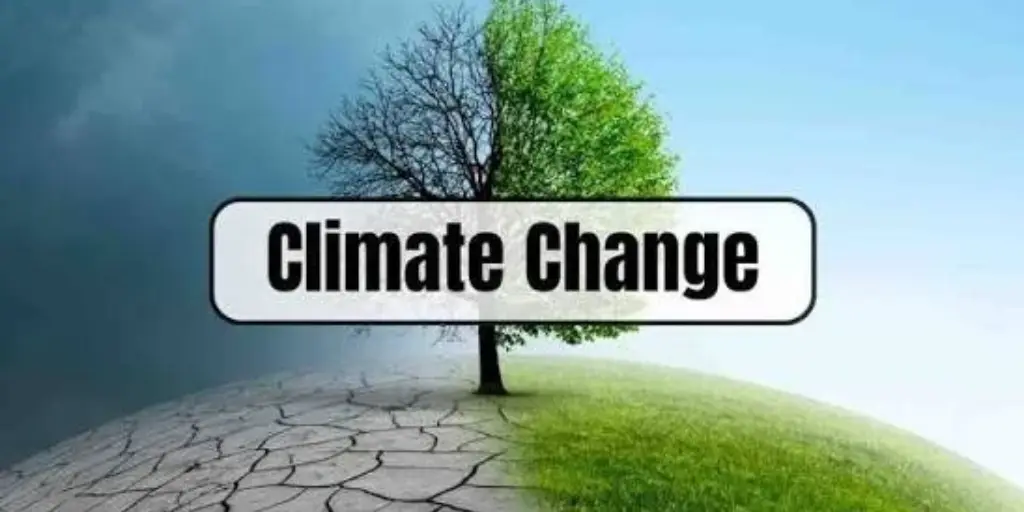
Climate change affects rainfall patterns by changing the temperature of the atmosphere, oceans, and land. A warmer atmosphere can hold more water vapour, while warmer oceans can increase evaporation. These changes influence where, when, and how much rain falls. Some places may receive heavier rainfall and more floods, while other places may experience longer dry periods and droughts.
Rainfall does not change in the same way everywhere. The result depends on local geography, wind systems, ocean temperatures, mountains, and other natural factors. To understand the connection clearly, we must first understand the water cycle and how climate change adds energy to it.
Let Us Understand the Concept
What is climate change?
Climate means the average pattern of weather in a place over a long period, usually many decades. It includes temperature, rainfall, wind, humidity, and the frequency of events such as storms or droughts.
Climate change means a long-term change in these average conditions. The present period of global warming is mainly caused by human activities such as burning coal, petroleum, and natural gas, as well as deforestation. These activities increase the amount of greenhouse gases, including carbon dioxide and methane, in the atmosphere.
Greenhouse gases absorb some of the heat that Earth sends back toward space. This natural greenhouse effect makes Earth warm enough for life, but an increased concentration of these gases strengthens the effect and raises the average global temperature.
The water cycle and rainfall
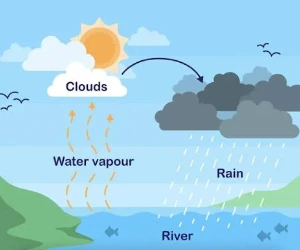
Rainfall is part of the water cycle, the continuous movement of water between Earth’s surface and the atmosphere.
- The Sun heats oceans, rivers, lakes, soil, and plants.
- Liquid water changes into water vapour through evaporation. Plants also release water vapour through transpiration.
- Warm, moist air rises and cools at higher altitudes.
- Water vapour changes into tiny liquid droplets or ice crystals. This process is called condensation, and it forms clouds.
- When cloud droplets or ice crystals become large and heavy enough, they fall as precipitation, such as rain, snow, or hail.
- Water returns to rivers, soil, groundwater, and oceans, and the cycle begins again.
Climate change can affect almost every stage of this cycle. A change in temperature can alter evaporation, the amount of moisture in the air, cloud formation, wind movement, and the timing and intensity of rainfall.
Why does a warmer atmosphere hold more moisture?
Warm air can contain more water vapour than cool air. This does not mean that every warm place is always rainy. It means that, when water is available and conditions are suitable, a warmer atmosphere can collect more moisture.
When this moisture eventually condenses, it can produce heavier rainfall. For example, if moist air is forced upward by a storm or mountain, the water vapour cools and forms clouds. Because the air may contain more moisture in a warmer climate, the resulting rain can be more intense.
This is one reason climate change can increase the risk of very heavy rainfall events, even in places where the total yearly rainfall does not increase.
Increased evaporation and changing rainfall
Higher temperatures increase evaporation from oceans, lakes, rivers, and wet soil. They can also increase water loss from plants through transpiration. More evaporation supplies additional water vapour to the atmosphere.
However, evaporation and rainfall do not always increase together in the same location. If a region becomes hotter but does not receive enough rain, its soil and plants may lose water faster than they receive it. This can make dry conditions worse. Therefore, climate change can contribute to both intense rainfall and drought, sometimes in the same region at different times of the year.
Changes in the timing and season of rainfall
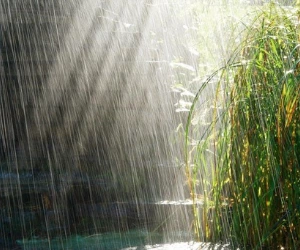
Climate change can shift the beginning, ending, or strength of rainy seasons. A rainy season may start later, end earlier, or contain longer breaks between rainy periods. In another region, rainfall may begin earlier or become concentrated into a shorter period.
These changes are important for farming. Crops need water at particular stages, such as seed germination, flowering, and fruit formation. If rain arrives too late, falls suddenly, or stops during a critical growth stage, crop production can be affected even if the total rainfall for the year appears normal.
Heavy rainfall, floods, and storms
A warmer atmosphere can support more moisture, and warmer oceans can provide energy and moisture to some storms. When suitable wind and pressure conditions are present, storms may produce very heavy rainfall.
Heavy rainfall over a short time can exceed the ability of soil, drains, rivers, and reservoirs to absorb or carry water. This may lead to flooding. Urban areas are especially vulnerable because roads and buildings prevent rainwater from soaking into the ground.
Climate change is not the only cause of a flood. Poor drainage, construction on floodplains, deforestation, blocked waterways, and land-use changes can also increase flood risk. Climate change can make some intense rainfall events more likely or more severe, while local conditions determine the actual damage.
Droughts and longer dry periods
A drought is a period of unusually low water availability. Drought can occur when rainfall decreases, when rainy seasons become unreliable, or when higher temperatures cause water to evaporate more quickly.
In some areas, climate change may increase the time between rainfall events. Soil dries out, rivers and reservoirs receive less water, and plants experience water stress. If high temperatures continue, the effects of a rainfall shortage can become more serious.
It is important to understand that climate change does not mean every place will become permanently drier. Global warming changes the movement of water through the atmosphere, but the effects vary by region. Some areas may become wetter, some drier, and some may experience greater variability.
Why are rainfall changes different from place to place?
Rainfall depends on several interacting factors:
- Ocean temperatures: Warm oceans add moisture to the atmosphere and can influence storms.
- Wind patterns: Winds transport moist or dry air from one region to another.
- Mountains: Air rising over mountains cools and may produce rain on one side, while the other side may be drier.
- Seasonal circulation: Systems such as monsoon winds control seasonal rainfall in many parts of the world.
- Land and vegetation: Forests, soil, and water bodies affect evaporation and local humidity.
- Natural climate variations: Events such as El Niño and La Niña can temporarily change rainfall patterns.
Because these factors differ between regions, climate change cannot be described as simply “more rain everywhere” or “less rain everywhere.” Scientists examine long-term observations and climate models to identify regional trends.
Rainfall intensity and total rainfall are different
Total rainfall is the amount of rain received over a selected period, such as a month or year. Rainfall intensity describes how quickly rain falls, often measured over a short time.
A place could receive about the same total annual rainfall as before, but more of it might fall during a few very heavy events. The longer dry intervals between those events can increase drought and flood risks at the same time. This is why both the amount and distribution of rainfall matter.
Effects on people and ecosystems

Changing rainfall patterns can affect agriculture, drinking-water supplies, forests, wetlands, rivers, and wildlife. Heavy rain can wash soil and nutrients away, while drought can reduce crop growth and shrink water sources. Floods may damage homes, roads, bridges, and sanitation systems.
Plants and animals are adapted to particular seasonal conditions. If rainfall changes, flowering, breeding, migration, and food availability may also change. Ecosystems can become stressed when rainfall changes rapidly or when climate change combines with habitat loss and pollution.
How can society respond?
People can reduce climate change by lowering greenhouse-gas emissions. Important actions include using energy efficiently, increasing renewable energy, protecting forests, improving public transport, and reducing unnecessary burning of fossil fuels.
Communities also need to adapt to rainfall changes. They can improve drainage, protect wetlands, store rainwater, use water-efficient irrigation, restore forests, develop flood warning systems, and grow crops suited to local conditions. Adaptation cannot prevent every impact, but it can reduce risks.
Important Scientific Terms and Their Meanings
| Scientific Term | Simple Meaning | Example or Explanation |
|---|---|---|
| Climate | The long-term average pattern of weather | A region’s usual temperature and rainfall over many years. |
| Climate change | A long-term change in climate conditions | Changes in average temperature, rainfall, or weather extremes. |
| Greenhouse gas | A gas that absorbs heat in the atmosphere | Carbon dioxide and methane are examples. |
| Water vapour | Water in its gaseous state | It enters the air through evaporation and transpiration. |
| Evaporation | Change of liquid water into water vapour | Water evaporates from a lake when heated by the Sun. |
| Transpiration | Release of water vapour by plants | Leaves lose water through tiny openings called stomata. |
| Condensation | Change of water vapour into liquid droplets | It helps form clouds when moist air cools. |
| Precipitation | Water falling from clouds | Rain, snow, sleet, and hail are forms of precipitation. |
| Rainfall intensity | How quickly rain falls | A short, very heavy shower has high intensity. |
| Drought | A long period of unusually low water availability | It may result from low rainfall and high evaporation. |
| Flood | Overflow of water onto normally dry land | It can occur when heavy rain exceeds drainage capacity. |
Examples or Activities
Simple demonstration of evaporation and condensation
Aim: To observe two important stages of the water cycle.
Materials Required: A clear glass, a few ice cubes, and warm water. Use adult supervision when handling warm water.
Procedure:
- Pour warm water into the glass.
- Place ice cubes on a small plate or lid above the opening of the glass without touching the water.
- Observe the outside and upper part of the glass for several minutes.
Observation: Water vapour rises from the warm water. The cooler surface near the ice causes some vapour to change into tiny water droplets.
Explanation: Warm water provides energy for evaporation. Cooling removes energy from the water vapour, causing condensation. In the atmosphere, similar cooling helps clouds form, although clouds develop through much larger and more complex processes.
Conclusion: Heating and cooling help move water between the liquid and gaseous states. Climate change alters the temperature conditions that control these processes.
Real-life example
After a hot day, a sudden storm may produce very heavy rain. The heat can increase evaporation, while rising air and changing weather systems lift moist air and form clouds. If the atmosphere contains abundant moisture, the storm may release a large amount of rain in a short time.
What Should We Understand from This Topic?
Climate change changes rainfall patterns mainly by warming the atmosphere and surface of Earth. Warmer conditions increase evaporation and allow the atmosphere to hold more moisture. This can make some rainfall events heavier. At the same time, changing winds, ocean conditions, and seasonal circulation can alter where rain falls and when it arrives.
The result is not the same everywhere. Some regions may face heavier rainfall and flooding, while others may face longer dry periods and drought. Even where yearly rainfall changes little, rainfall may become less evenly distributed. Understanding these differences helps communities plan for water management, farming, disaster safety, and ecosystem protection.
Key Points to Remember
- Climate is the long-term average pattern of weather.
- Climate change is a long-term change in temperature, rainfall, and other climate conditions.
- A warmer atmosphere can hold more water vapour when moisture is available.
- Higher temperatures can increase evaporation from oceans, soil, lakes, and plants.
- More atmospheric moisture can contribute to heavier rainfall during suitable weather conditions.
- Climate change can also increase the risk of drought by causing longer dry periods and faster water loss.
- Rainfall intensity and total rainfall are different measurements.
- Rainfall changes vary according to winds, oceans, mountains, seasons, land use, and natural climate variations.
- Floods and droughts are influenced by climate as well as local factors such as drainage and water management.
- Reducing greenhouse-gas emissions and improving adaptation can lower climate-related risks.
Conclusion
Climate change affects rainfall by disturbing the balance of the water cycle. As Earth warms, evaporation, atmospheric moisture, cloud formation, and weather circulation can change. These changes may bring heavier downpours in some situations, longer dry periods in others, or less predictable rainy seasons. The central idea to remember is that climate change changes not only how much rain falls, but also where, when, and how intensely it falls.