

Recently updated on January 9th, 2026 at 05:33 am
Physics is one of the most important subjects in science.
It helps us understand how the world around us works.
For Students, physics is not just about formulas and exams.
It explains everyday things like motion, light, sound, heat, and electricity.
From switching on a fan to watching the stars in the sky, physics is everywhere.
This subject builds curiosity, logic, and problem-solving skills in students.
Let us understand physics simply and clearly.
What Is Physics?
Physics is the study of matter, energy, and how they interact.
In simple words, physics explains:
Why objects move
How energy is used
How natural laws control the universe
Physics does not depend only on memorisation.
It encourages students to ask why and how things happen.
This is why physics is called the foundation of science.
Physics in Everyday Life
Physics is not limited to classrooms or laboratories.
We use it every day, often without noticing.
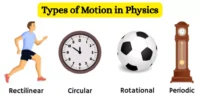
When you throw a ball, physics explains its motion.
When you hear music, physics explains sound waves.
Here are some easy real-life examples students can relate to:
Walking and running use motion and force
Mobile phones work using electricity and waves
Fans and lights depend on electrical energy
Rainfall involves pressure and gravity
Cooking uses heat transfer
Even riding a bicycle uses balance, friction, and force.
Physics helps students connect learning with real life.
Main Branches of Physics Explained Simply
Physics is divided into different branches.
Each branch focuses on a specific type of study.
1. Mechanics
Mechanics studies motion and forces.
It explains how objects move or stay at rest.
Examples include cars, falling objects, and sports movements.
This is usually the first branch students learn.
2. Thermodynamics
Thermodynamics deals with heat and temperature.
It explains how heat flows from one object to another.
Cooking food, boiling water, and engines work on this concept.
Students see thermodynamics daily in kitchens and the weather.
3. Optics
Optics is the study of light.
It explains reflection, refraction, and images.
Mirrors, spectacles, cameras, and rainbows are examples.
This branch helps students understand vision and light behaviour.
4. Electricity and Magnetism
This branch studies electric current and magnetic effects.
Fans, refrigerators, televisions, and chargers use electricity.
Magnets, motors, and generators are part of this branch.
Modern life is impossible without this physics.
5. Modern Physics
Modern physics explains advanced concepts like atoms and energy.
It includes nuclear physics and space science.
Lasers, satellites, and medical scans use modern physics.
Students interested in technology and space love this branch.
Why Students Should Study Physics
Many students feel physics is difficult.
But understanding its importance changes that mindset.
1. Physics Builds Logical Thinking
Physics teaches students to think step by step.
It improves reasoning and problem-solving ability.
These skills help in exams and real-life decisions.
2. Physics Explains the Real World
Physics answers everyday questions.
Why does a moving bus push you back?
Why does ice float on water?
Learning physics makes students more curious and confident.
3. Physics Helps in Career Growth
Physics opens doors to many careers.
Engineering, medicine, space science, and technology depend on physics.
Students with strong physics basics have more opportunities.
Even competitive exams give importance to physics.
4. Physics Improves Mathematical Skills
Physics uses numbers and formulas in a meaningful way.
Students learn how math applies to real situations.
This makes math easier and more interesting.
Common Misconceptions About Physics
Many students fear physics because of myths.
One myth is that physics is only for toppers.
Another is that physics means only calculations.
In reality, physics is about understanding concepts.
Once concepts are clear, formulas become simple.
Regular practice and curiosity make physics enjoyable.
How Students Can Learn Physics Easily

Students can learn physics better with the right approach.
Understand concepts instead of memorising
Relate lessons to daily life
Practice diagrams and examples
Ask questions in class
Revise regularly
Using simple notes and visual explanations also helps.
Physics becomes easy when learning is consistent.
Here are Key Physics Points for Quick Revision
Units & Dimensions: Always check formulas using dimensional analysis; it helps catch mistakes in numerical problems.
Motion Basics: Distance ≠ displacement, speed ≠ velocity; acceleration is the rate of change of velocity.
Newton’s Laws:
1st → inertia
2nd → F=maF = ma (most numericals)
3rd → action–reaction pairs act on different bodies
Work–Energy Relation: Work done = change in kinetic energy; energy is conserved but can change form.
Force & Pressure: Pressure = force/area; smaller area → more pressure (sharp knife concept).
Electricity Core: V=IRV = IR; higher resistance → less current for the same voltage.
Waves & Light: Frequency remains constant when a wave changes medium; speed and wavelength change.
Conclusion
Physics is not just a school subject.
It is a way to understand the universe.
For Students, physics builds knowledge, confidence, and curiosity.
It explains how small actions create big effects.
With simple understanding and regular practice,
physics becomes one of the most interesting subjects to learn.
Frequently Asked Questions (FAQs)
1. What is physics in simple words for students?
Physics is the study of matter, energy, and how things move or change. It helps students understand how everyday objects and natural events work.
2. Why is physics important for students?
Physics is important because it develops logical thinking, explains real-life situations, and forms the base for careers in engineering, medicine, and technology.
3. Is physics difficult to learn for students?
Physics is not difficult if students understand the concepts clearly. Regular practice and relating topics to real life make physics easy and interesting.
4. Where do we use physics in daily life?
We use physics while walking, riding a bicycle, using mobile phones, cooking food, and even while watching television or listening to music.
5. Which branch of physics is best for beginners?
Mechanics is the best branch for beginners because it explains basic ideas like motion, force, and balance using simple real-life examples.