


Early childhood is the most important stage of a child’s learning journey. During this time, children’s brains develop very fast. STEM education helps children think, explore, and understand the world naturally.
Instead of memorising answers, STEM teaches children how to think and solve problems from a young age.
Builds Curiosity and Love for Learning
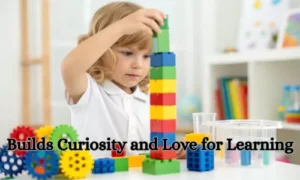
Children are naturally curious. They ask questions like:
- Why does it rain?
- How does a fan work?
- Why do things fall?
STEM education encourages children to ask questions freely and find answers through observation and activities. This builds a lifelong love for learning.
Improves Thinking and Problem-Solving Skills
STEM activities involve:
- Trying different ideas
- Making mistakes
- Finding better solutions
When children face small challenges and solve them, they develop logical thinking and decision-making skills. These skills are useful in school and daily life.
Makes Learning Practical and Fun
Traditional learning often focuses on books. STEM learning focuses on real-life experiences, such as:
- Counting fruits while shopping
- Mixing colours while painting
- Building shapes with blocks
This makes learning enjoyable and easy to understand.
Develops Creativity and Innovation
STEM does not limit children to one correct answer. It allows them to:
- Think creatively
- Build new ideas
- Try different methods
This helps children become innovative thinkers instead of rote learners.
Builds Confidence From an Early Age

When children solve problems on their own, they feel proud. STEM education helps children:
- Trust their ideas
- Learn from mistakes
- Gain confidence in learning
Confident learners perform better in school and social situations.
Prepares Children for Future Learning

STEM education builds strong foundations in:
- Science understanding
- Math skills
- Logical thinking
These foundations make higher classes easier and reduce the fear of difficult subjects later.
Role of Parents in Early STEM Learning
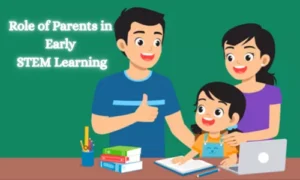
Parents can support early STEM learning by:
- Encouraging questions
- Allowing hands-on activities
- Praising effort, not just results
Simple encouragement helps children grow faster.
Conclusion
STEM education in early childhood is not about pressure or competition. It is about building thinking skills, curiosity, and confidence. When children start STEM early, they grow into smart, creative, and independent learners.
FAQ – QUESTIONS & ANSWERS
1. Why is STEM education important at a young age?
Because early childhood is when thinking and learning abilities develop the fastest.
2. Does STEM help in school performance?
Yes. STEM improves understanding, problem-solving, and confidence in learning.
3. Is STEM suitable for preschool children?
Yes. STEM can be taught using simple play-based activities.
4. Does STEM replace traditional learning?
No. STEM supports and improves traditional learning methods.
5. How can parents encourage STEM learning early?
By allowing curiosity, asking questions, and supporting hands-on activities.