

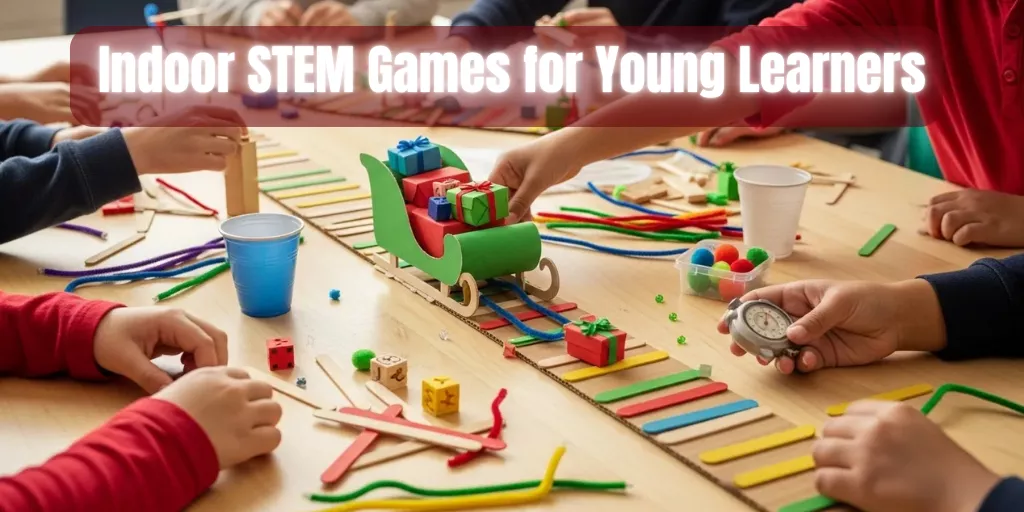
Not every day allows outdoor play. On rainy days, hot afternoons, or busy schedules, indoor STEM games help children learn while staying active at home. These games make learning fun and keep young learners engaged without pressure.
Indoor STEM games turn playtime into smart learning time.
Why Indoor STEM Games Are Important

Indoor STEM games help children:
- Stay active indoors
- Reduce screen time
- Improve focus and thinking
- Learn through play
They are especially helpful for young learners who enjoy games more than books.
Science-Based Indoor Games

1. Sink or Float Game
How to play: Use a bowl of water and small objects.
What kids learn: Basic science and prediction skills.
2. Colour Hunt
How to play: Ask kids to find objects of specific colours.
What kids learn: Observation and classification.
Engineering Games for Indoor Play
1. Build the Tallest Tower
How to play: Use cups, blocks, or boxes.
What kids learn: Balance, design, and creativity.
2. Paper Folding Challenge
How to play: Fold paper in different ways and test its strength.
What kids learn: Structure and problem-solving.
Math Games Inside the Home

1. Shape Hunt
How to play: Find shapes around the house.
What kids learn: Geometry and recognition.
2. Number Jump Game
How to play: Place numbers on the floor and jump in order.
What kids learn: Counting and sequencing.
Logic and Thinking Games
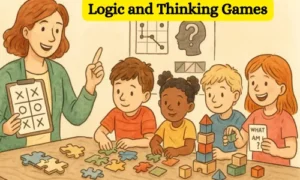
1. Pattern Game
Ask children to continue a pattern using objects or drawings.
This improves logical thinking.
2. Sorting Game
Sort toys by size, colour, or type.
This builds classification skills.
How Parents Can Make Indoor STEM Games Effective
- Keep rules simple
- Let kids lead the game
- Encourage thinking aloud
- Celebrate effort
Games work best when learning feels natural and enjoyable.
Safety Tips for Indoor STEM Games

- Clear the play area
- Avoid small objects for toddlers
- Supervise water-based games
- Keep sessions short
Safety helps children enjoy learning confidently.
Conclusion
Indoor STEM games are a powerful way to keep young learners active, curious, and engaged at home. With simple games and everyday items, children can build strong thinking and problem-solving skills indoors.
FAQ – QUESTIONS & ANSWERS
1. Are indoor STEM games suitable for young learners?
Yes. Indoor STEM games are designed to be safe and age-appropriate.
2. Do indoor STEM games need special materials?
No. Most games use common household items.
3. How long should kids play indoor STEM games?
15–30 minutes per session is ideal.
4. Can indoor STEM games replace outdoor play?
No. They support learning when outdoor play is not possible.
5. Do indoor STEM games really help learning?
Yes. They improve thinking, focus, and problem-solving skills.