

Recently updated on January 13th, 2026 at 02:56 pm
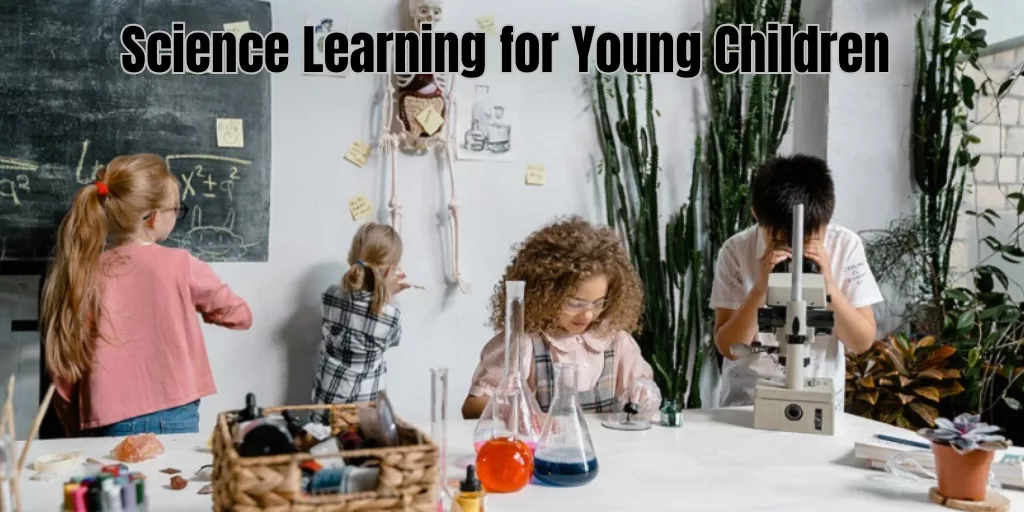
Science learning for young children is not about memorising facts or reading heavy textbooks. It is about observing, questioning, and exploring the world around them. Children are naturally curious, and science helps them understand everyday things in a simple and meaningful way.
When science is taught early, children learn to think critically, ask questions, and develop a love for learning.
Why Science Is Important at a Young Age
Young children constantly observe their surroundings. Science learning helps them:
- Understand how things work
- Ask “why” and “how” questions
- Develop thinking and observation skills
- Build confidence in learning
Early science education builds a strong base for future learning.
How Young Children Learn Science Best
Children learn science best through:
- Hands-on activities
- Daily life examples
- Play and exploration
- Simple experiments
Instead of telling answers, science learning should encourage discovery.
Everyday Science Around Children

Science is everywhere in daily life, such as:
- Ice melting in a bowl
- Plants growing in soil
- Shadows changing during the day
- Objects floating or sinking in water
These simple observations help children understand scientific ideas naturally.
Benefits of Early Science Learning
Science learning helps young children:
- Improve curiosity and creativity
- Build problem-solving skills
- Develop logical thinking
- Reduce fear of science in later classes
Children who enjoy science early feel more confident in school.
Science Learning Through Play
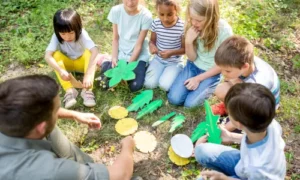
Play-based science learning makes concepts easy to understand. Examples include:
- Playing with water and sand
- Mixing colors
- Sorting objects
- Exploring nature
Play allows children to learn without pressure or fear of mistakes.
Role of Parents in Science Learning
Parents don’t need to teach like teachers. Simple actions help:
- Encourage questions
- Let children explore freely
- Discuss what they observe
- Avoid giving direct answers
Support and curiosity matter more than knowledge.
Common Mistakes to Avoid

Parents should avoid:
- Forcing learning
- Expecting correct answers
- Comparing children
- Making science boring
Science should feel fun and exciting, not stressful.
Conclusion
Science learning for young children builds curiosity, confidence, and thinking skills. When children learn science through everyday experiences and play, they develop into curious learners who enjoy exploring the world.
FAQ – QUESTIONS & ANSWERS
1. What is science learning for young children?
It is learning about the world through observation, play, and simple activities.
2. At what age can children start learning science?
Children can start learning science as early as preschool through daily experiences.
3. Is science learning difficult for young children?
No. When taught through play and activities, science is easy and fun.
4. Do children need experiments to learn science?
Simple observations and daily activities are enough for early science learning.
5. How can parents support science learning at home?
By encouraging curiosity, asking questions, and allowing exploration.