
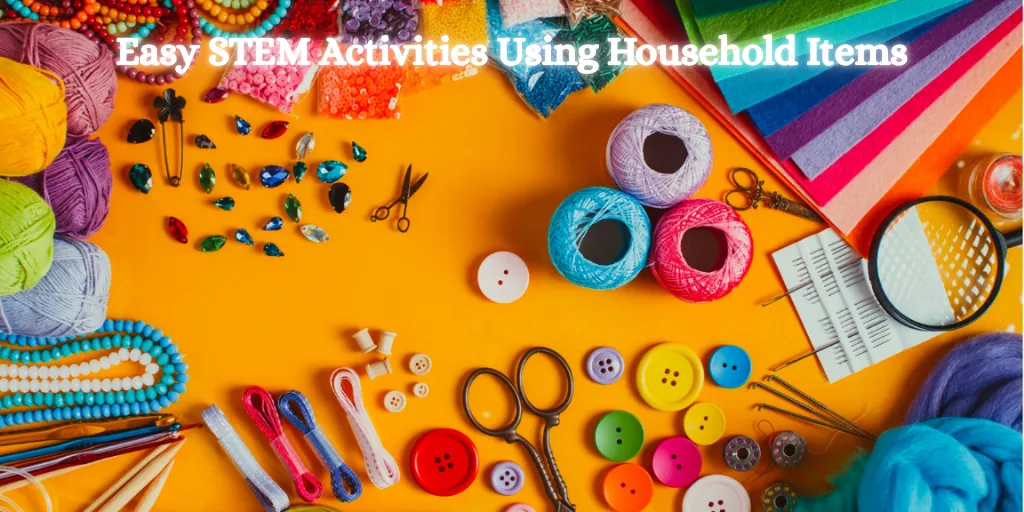
STEM learning does not require special kits or expensive toys. Many STEM activities can be done using simple household items that are already available at home. These activities help children learn science, math, and problem-solving in a fun and stress-free way.
Children enjoy learning more when it feels like play.
Why Household STEM Activities Work Well

Using household items helps children:
- Relate learning to daily life
- Feel comfortable experimenting
- Learn without fear of failure
These activities are simple, safe, and effective for young learners.
Science Activities Using Daily Items
1. Floating and Sinking Test
Items needed: Bowl, water, small objects
Ask children to guess which objects will float or sink. This teaches basic science concepts like weight and density.
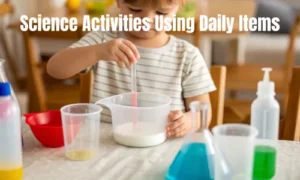
2. Colour Mixing With Water
Items needed: Water, cups, food colouring
Children learn about colour combinations and observation.
3. Ice Melting Experiment
Items needed: Ice cubes, plates
Children observe how ice changes form and learn about temperature.
Engineering Activities Using Household Items
1. Paper Bridge Challenge
Items needed: Paper, books
Ask children to build a bridge using paper that can hold a small object.
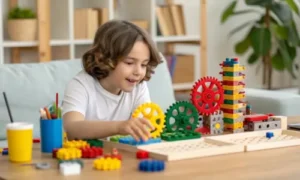
2. Cup Tower Building
Items required: Plastic or paper cups
This activity improves balance, design thinking, and creativity.
Math Activities With Everyday Objects

1. Counting and Sorting
Items needed: Buttons, coins, toys
Children can count, sort by size or colour, and create patterns.
2. Measuring While Cooking
Items required: Cups, spoons
Children learn measurement and numbers naturally.
Technology Learning Without Screens

Technology is not only about devices.
Simple ideas:
- Understanding how switches work
- Learning how fans and lights function
- Using safe kitchen tools under supervision
This helps children understand how tools help us.
Safety Tips for Home STEM Activities

- Always supervise young children
- Use age-appropriate items
- Avoid sharp or harmful objects
- Keep activities simple
- Safety makes learning enjoyable and worry-free.
How Parents Can Make STEM More Fun
- Ask open-ended questions
- Encourage children to explain what they observe
- Praise effort, not perfection
- Let kids try different ideas
STEM learning grows when children feel supported.
Conclusion
Easy STEM activities using household items show children that learning is everywhere. With simple tools and curiosity, parents can help children build strong thinking skills and creativity right at home.
FAQ – QUESTIONS & ANSWERS
1. Can STEM activities be done with normal household items?
Yes. Many STEM activities use common items like cups, paper, water, and toys.
2. Are these activities suitable for young children?
Yes. Activities can be adjusted based on age and ability.
3. Do parents need to prepare a lot before these activities?
No. Most activities need minimal preparation and time.
4. How long should a STEM activity last?
15–30 minutes is enough to keep children engaged.
5. Do these activities really help learning?
Yes. They improve observation, thinking, and problem-solving skills.