

For many students, math feels difficult, boring, or even scary. But what if math wasn’t just numbers and formulas? What if it were a story—full of characters, problems, journeys, and solutions?
When math is taught like a story, concepts become easier to visualise, understand, and remember. This approach works for all age groups, from young learners to senior students preparing for competitive exams.
Why Stories Make Learning Easier
Stories stay in our minds much longer than plain information. That’s why we remember childhood tales even after decades, but forget formulas within minutes.
Here’s why storytelling works so well:
1. Stories Give Meaning to Numbers

A number becomes more interesting when it represents something.
Example:
Instead of saying, “A train travels 60 km/hr,”
Tell a story:
“A fast train races across the tracks at 60 km every hour, trying to reach the next station before sunset.”
Now the student imagines speed → distance → time.
2. Stories Build Connections

Math concepts rarely exist alone. A story connects them.
For example:
- Fractions become characters trying to share a pizza.
- Geometry becomes a world where shapes live, fight, or solve puzzles.
- Algebra becomes a mystery where x and y hide, and students act as detectives.
3. Stories Reduce Fear
- A friendly story removes the pressure of getting “right or wrong” answers.
- When students enjoy the experience, confidence grows—and so does accuracy.
How to Teach Math Through Stories
1. Turn Word Problems into Mini-Movies
Make students imagine the scene.
Example:
- “A farmer has 12 apples and gives 3 to each friend.”
Instead of solving directly, create a picture:
- A farmer walking with baskets, handing out apples to smiling friends.
This feels natural.
2. Introduce Characters for Concepts
Give personality to math elements:
- Zero → a silent hero
- Infinity → a never-ending road
- Triangles → the strongest shape for warriors
- Prime numbers → lonely numbers with no partners
- Fractions → families sharing pieces
Students remember characters → concepts become unforgettable.
3. Create Stories Behind Formulas
Every formula has a meaning.
Instead of saying:
Area of a rectangle = length × breadth
Tell it like a story:
- “The rectangle grows by stretching across its length and breadth. Multiply them to know how big its land becomes.”
Story = logic + memory.
4. Relate Math to Real Life
Use daily experiences:
- Grocery shopping → addition & subtraction
- Sharing food → fractions
- Salary → percentages
- Mobile data → ratios
- Travelling → speed, distance, time
When math connects to real life, understanding becomes effortless.
Examples of Math Stories
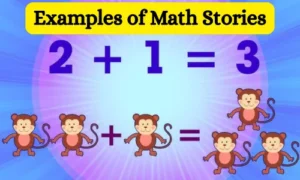
1. The Tale of the Missing “X”
- In algebra, x is a lost treasure.
- Numbers give clues.
- Students become detectives trying to find x.
- This makes solving equations fun.
2. The Shape Kingdom
In geometry, every shape plays a role:
- Squares are stable kings
- Circles have no corners and love to roll
- Triangles are strong soldiers
- Angles become magical powers.
This visual method makes even difficult geometry chapters easier to understand.
3. The Journey of Percentages
Think of percentages as travellers:
- 0% → beginning
- 100% → destination
- Students understand increase, decrease, profit, and loss easily when explained through journeys.
Benefits of Learning Math Through Stories
- Better understanding
- Higher memory retention
- Less fear, more curiosity
- Strong visualisation
- Faster problem-solving
- Improved creativity
- Greater engagement
Whether learning at school or preparing for competitive exams, storytelling makes math meaningful.
Conclusion
Math becomes easier—not by memorising formulas, but by understanding them.
When students see math as a story, numbers turn into characters, concepts become adventures, and learning becomes natural and enjoyable.
If you’re a student, teacher, or parent, try storytelling in your next math lesson. You’ll be surprised how powerful this method is.